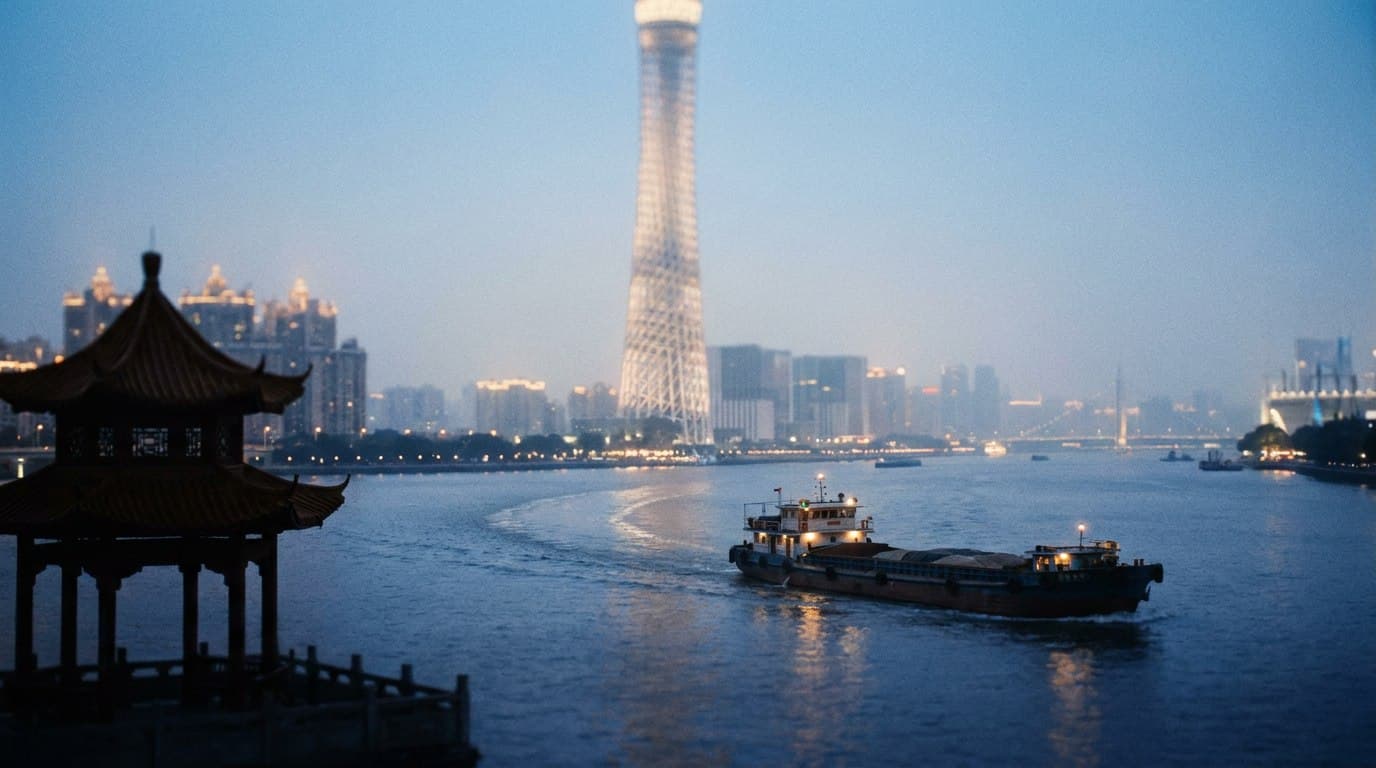
The Canton Fair (officially the China Import and Export Fair) is the largest trade fair in the world: a twice-yearly sourcing event in Guangzhou, China, where more than 28,000 manufacturers exhibit across three specialized phases. For a GCC importer, it is the single densest concentration of factory-direct suppliers on earth — and the 140th session runs 15 October to 4 November 2026.
This guide covers the 2026 dates phase by phase, how to attend from Kuwait or anywhere in the Gulf, the mistakes that cost first-time buyers real money, and when it makes more sense to have a procurement team walk the fair for you.
Canton Fair 2026 dates: two sessions a year
The fair runs twice yearly. The 2026 sessions:
- Spring session (139th): finished — it ran in three phases from 15 April to 5 May 2026.
- Autumn session (140th): upcoming, 15 October to 4 November 2026 — full details below.
- The next one after that: spring 2027 (141st) in April–May.
Each phase within a session runs five days, with a break in between. You choose your phase by product category — attending the wrong phase is the most common scheduling mistake.
| Phase | Dates (2026) | Product categories |
|---|---|---|
| Phase 1 | 15–19 October | Electronics, household appliances, industrial equipment and machinery, hardware and tools, building materials, new energy, vehicles and spare parts |
| Phase 2 | 23–27 October | Daily consumer goods, gifts, home decoration, kitchenware, ceramics |
| Phase 3 | 31 October – 4 November | Textiles and garments, shoes, office and school supplies, health and leisure, food, medical products |
Venue: China Import and Export Fair Complex, Pazhou, Guangzhou. Hours: 9:30–18:00 daily. Entry for overseas buyers is free with a buyer badge (details below).
What exactly is the Canton Fair?
Running since 1957, the fair is organized under China's Ministry of Commerce and held every spring (April–May) and autumn (October–November). By the organizers' own figures, a full session brings together tens of thousands of exhibitors across roughly 1.5 million square meters of exhibition space, with buyers attending from more than 200 countries and regions.
Three numbers matter for a Gulf buyer:
- The exhibitors are largely manufacturers, not window-shop traders — this is where you meet the factory itself.
- Every phase is a different fair. A restaurant-supply buyer at Phase 1 is in the wrong building for ceramics and kitchenware; those are Phase 2.
- Prices quoted at the booth are opening prices. The real negotiation happens in the follow-up, after the fair, when you know the factory's competition.
Which phase should a GCC buyer attend?
| Your business | Your phase | Why |
|---|---|---|
| Restaurants, cafés, cloud kitchens | Phase 2 | Kitchenware, tableware, packaging, home and hotel supply |
| Retail and e-commerce | Phase 2, then 3 | Consumer goods first; apparel and accessories in Phase 3 |
| Construction and contracting | Phase 1 | Building materials, hardware, lighting, machinery |
| Industrial and manufacturing | Phase 1 | Production lines, equipment, spare parts, new energy |
| Fashion, uniforms, textiles | Phase 3 | Garments, fabrics, footwear |
| Clinics and medical supply | Phase 3 | Medical products and consumables |
How to attend from Kuwait or the GCC
- Register for a buyer badge online on the fair's official site before you travel. It is free, and the badge covers all three phases of the session. Bring a passport copy and a business card; a company license copy helps.
- Visa: Kuwaitis currently enter visa-free. Kuwaiti passport holders enter China without a visa under the trial exemption China has extended through 31 December 2026 — the same exemption covers Saudi Arabia, Oman and Bahrain, while the UAE and Qatar hold permanent visa-free entry. Confirm the exemption is still in force before booking (it is a renewable trial), and the fair's electronic invitation letter supports a visa application for anyone who needs one.
- Fly into Guangzhou (CAN) or Hong Kong. Direct Gulf–Guangzhou routes exist from Dubai, Doha and Riyadh; from Kuwait most itineraries connect once.
- Book a hotel near Pazhou early. Fair-week rates triple, and anything walkable to the complex sells out weeks ahead. Metro Line 8 serves the complex directly; Zhujiang New Town is an excellent alternative for restaurants and services, and the major hotels run free shuttles to and from the fair on show days.
- Plan two days per phase minimum. The complex is measured in kilometers, not halls. Shortlist exhibitors on the fair's app before you arrive and walk with a plan.
- Collect quotes the right way. Ask every booth for FOB port-of-loading prices, minimum order quantity, and production lead time — in writing, with the salesperson's WeChat. A photo of the booth number saves hours later.
- Set up payments before you fly. Most small shops and restaurants in China take neither foreign cards nor cash easily. Install Alipay and WeChat Pay and link them to your bank card before departure — you will pay for nearly everything through them.
- Set up your internet. Google services and WhatsApp are blocked inside China. Install a reliable VPN on your phone before arrival so your business and family communication keeps working.
The five mistakes that cost first-time buyers money
- Paying a deposit at the booth. Verify the company behind the booth first: business license, factory audit, export record. A booth is not a factory.
- Treating the booth price as the final price. It is an opening position. Factories expect a negotiation round after the fair.
- Assuming the exhibitor is the manufacturer. Some booths are trading companies. Ask directly, then verify — the answer changes your price by 10–20%.
- Ordering without an inspection plan. A sample approved at the fair does not guarantee the container matches it. Third-party QC before shipment is not optional; see our guide on quality inspection in China.
- Flying home without a follow-up engine. The fair produces fifty business cards; the money is made in the ninety days of quoting, sampling and negotiating that follow. Most solo buyers lose the thread by week two.
Attend yourself, or send a procurement team?
An honest comparison for a Gulf SME:
| Attending yourself | Delegating to a procurement team | |
|---|---|---|
| Direct cost | Flights, hotel at fair rates, visa, 7–10 days away from the business | A defined procurement fee |
| Coverage | The booths you physically reach | Full-phase coverage plus factories that never exhibit |
| Language and negotiation | English at the booth, translator by the hour | Native Chinese negotiation, factory-floor verification |
| After the fair | Follow-up depends on your own bandwidth | Quoting, sampling, QC and consolidation run as a process |
| Best when | You want market feel, relationships, and product discovery firsthand | You want factory-direct prices without losing two weeks, or you buy across several categories |
Both are legitimate. Many of our clients do both: they walk the fair for market sense, and hand the follow-up — RFQs, verification, samples, inspection, consolidated shipping — to our team on the ground.
Dr.Ship operates from Guangzhou and Yiwu year-round and attends every session of the fair. We source across all of China's manufacturing regions (see which region makes what), return factory quotes within 48 hours, and consolidate multi-supplier orders into one shipment to the Gulf — one invoice, no hidden fees.
Download the free Canton Fair guide
We packaged the practical side of this article into a step-by-step guide for first-time importers: a procurement glossary (FOB, MOQ, EXW and friends), phase selection, registration and visa steps, hotel timing, how to negotiate with factories, how to tell a factory from a trading company, and an arrival-day checklist. The guide is written in Arabic.
Download the Canton Fair guide (PDF, Arabic)
Want to know who we are first? The Dr.Ship Company Profile 2026 (PDF, Arabic + English).
Or start directly: book a free cost audit and we will show you, line by line, where your current purchase bill can drop.